Oops, we did it again!
Perhaps the swellest thing about being members of Taiwan's media is that we all know there's lots of room for improvement. It should go without saying that we are all committed to being the best darned, most thoroughly ethical journalists anywhere. The problem is that we all get on our high horses to kick the one that's down -- really hard -- whenever one goes down; then we seem to forget about ethics for a few weeks or months until the newest media-related scandal breaks out.
Last time, it was a TVBS reporter filming a gangster brandishing his plastic weapons and threatening his old boss -- and then claiming the footage was sent in by the gangster.
This time, it's SET (Sanli; 三立) TV airing a documentary (it produced on contract to the government; more on that later) on the 228 massacre and showing footage of KMT soldiers shooting captured Communists in Shanghai while a person describes the shooting of civilians by KMT soldiers in Keelung (Jilong; 基隆), in northern Taiwan.
KMT members are predictably upset about this. Now that they've discovered the outrage -- the documentary was aired two months ago -- they're saying it's another example of stirring up ethnic hatred against so-called Mainlanders. SET TV claims ignorance. Their argument seems to be: Well, this museum honoring one of the 228 victims sent us the footage and we thought it looked pretty good behind the execution narrative. It's not like we put up caption saying, "KMT soldier killing innocent civilian in Keelung.
News channels in Taiwan love to report on the lapses of their peers. They especially love it when that peer is highly rated - and SET and TVBS are both very popular. So this gives all the other channels a chance to play and replay lots of SET footage to score higher ratings for themselves. Meanwhile, one could imagine SET is losing ratings at this moment since viewers reason that you can't trust an interested party to report objectively. In any case, you can watch the key SET clips on any news channel now just as you could watch TVBS clips on any channel several weeks ago.
This could be a very good time to beef up ethics guidelines. But who has the time to think about that when there's ratings to grab? And next week, another story will take precedence and everyone, including SET, will forget about ethics again. It's hard to say if anything will change.
The government is not really of much use in establishing a better environment. Right now, the GIO (till recently the agency in charge of media regulation) is back on its heels since it commissioned the documentary. The GIO doesn't have much of an argument against opposition critics who say it's a lapdog of the DPP administration. The NCC (National Communications Commission) is the current regulator (at least until its legitimacy is revoked). Members of the NCC (appointees were all nominated by opposition parties by proportional representation; there are no DPP nominees sitting on the NCC as the ruling party disputes the legitimacy of the commission) are no doubt looking forward to heaping scorn on the GIO, SET and anyone else involved in the documentary.
KMT lawmakers say there was no proper tender announcement. This is surprising, since if the GIO were to indiscriminately hand out pork, you'd think they'd just shove it FTV's way, since FTV (Formosa TV 民視) has the right political stripes.The only substantive change this sorry episode is likely to engender is that SET will probably think twice before it accepts contracts from the GIO.
So basically, the KMT gets an opportunity to go on the offensive regarding a media project that documents its deplorable actions 60 years ago. The GIO demonstrates its incompetence. SET TV claims it's innocent of an ethics lapse since it too is incompetent. And the circus continues to proceed we know not where.
Wednesday, May 09, 2007
Wednesday, May 02, 2007
Speedy Passport Processing
Kudus to the Canadian government in general and the Canadian Trade Office in Taipei (CTOT) in particular for speedy handling of my passport renewal. I was somewhat chagrined last week when I discovered it would take 15 working days post-application for my new passport to arrive from Canada.
I filed last Thursday and I got a phone message yesterday (Tuesday) morning saying my passport was ready. This is the third passport renewal I've had processed from Taipei and it's the first time my passport has been machine readable. (I think that's good.) However, I'm more impressed with the fact that it took only three working days for the passport application to be processed in Canada and sent back to Taipei. Or maybe they just say it's processed in Canada.
I still wonder why the Canadian authorities have such strict requirements for passport renewal applications, though. In addition to turning in my old passport, I was also required to submit an original birth certificate and a second form of photo ID with my English signature. Fortunately, I keep the birth certificate in Taipei and I have also maintained a Canadian drivers' license (none of my Taiwan photo ID cards have my English signature). Also, I was required to find a guarantor (a professional who has known me for more than two years) to vouch for my identity by signing my application form and a photograph (thanks R). My American friends say they only need to provide their current (expiring) passport as proof of identity. That's, like, so relaxed eh? Can't we do that too, Canada?
While I'm at it, I would like to offer restrained praise for the new (Taiwan) National Immigration Agency. This was my first visit to their office since they began operations in January (if you're not in the know, be advised that Taipei residents don't complete residency-related procedures at the Foreign Police office anymore; now this type of thing is handled down Yan Ping Street, at the corner with Guangzhou Street). I had to get my Entry & Exit Permit transferred from my old passport to my new passport. It all went down quite smoothly. The CTOT gave me a slip of paper with the English-language help line run by the NIA (0800-024-111). I called and found after a hesitating start in English that it was much more expeditious to speak Mandarin, but the operator was very friendly and she provided the correct information.
So this was a good Taiwan day for me. I had absolutely no inclination to yell at anyone, unlike the unfortunate Japanese man who is the subject of Feiren's item posted earlier today.
Saturday, April 14, 2007
More Immigration Injustice
Just after an American woman in Hualien gets fined NT$6,000 for swearing at someone, a Japanese man married to a Taiwanese woman gets convicted of a similar offense--publicly insulting an official during the course of his official duties. This offense, defined in Article 140 of the Criminal Code) carries a prison term of up to six months. Prison terms of less than six months are routinely suspended as in this case where the man was sentenced to a reasonable 30 days for his hissy fit.
His banning from Taiwan for five years though is arbitrary, unreasonable, and disproportional to his offense especially in view of the fact that he is married to a Taiwanese national. Unlike the 30 - day suspended sentence, the decision to ban him from reentering Taiwan is a purely administrative decision. Since I don't have all the facts, I'm not going to speculate on which agency made the ruling and what their legal basis is but it should suffice to observe that nowhere in Article 140 is it provided that one can be banned from re entering Taiwan because of this offense.
In other words, this individual was meted out an additional and far more serious punishment in addition to the punishment for which the law provides. And he was of course denied due process since there was no hearing by an independent immigration tribunal--the Immigration Bureau simply tacked his five-year ban on out of spite and without any outside supervision using their sweeping administrative powers to deport and bar foreigners.
While it is somehow comforting to learn that at least some Japanese are susceptible to fits of 'Taiwan rage' and inappropriate behavior and that this behavior is no limited to westerners, the cumulative and extra-judicial punishment did not fit the crime at all. And then the Immigration Bureau had the nerve to complain that the man did not express 'remorse' for his crime and further had the audacity to file appeals--presumably appeals against his unjust banning from Taiwan.
Surely the appropriate course of action (if the man was causing a disturbance that was affecting other travelers) would have been to detain him at the airport until he cooled off. If he was foolish enough to strike an officer or destroy property, he could have been duly charged on those grounds. No doubt when he came to his senses he would have felt remorse and apologized.
But instead the Immigration Bureau, which we just learned today is riddled with officials colluding with human traffickers, takes refuge behind a outdated and authoritarian law to protect its questionable dignity and then abuses its administrative powers to bar someone from Taiwan. Talk about petty!
Rank thinks it's the Immigration Bureau that owes someone an apology. Fat chance he'll ever get it.
Just after an American woman in Hualien gets fined NT$6,000 for swearing at someone, a Japanese man married to a Taiwanese woman gets convicted of a similar offense--publicly insulting an official during the course of his official duties. This offense, defined in Article 140 of the Criminal Code) carries a prison term of up to six months. Prison terms of less than six months are routinely suspended as in this case where the man was sentenced to a reasonable 30 days for his hissy fit.
A Japanese man was given a suspended sentence of 30 days' detention and barred from the country for five years for cursing immigration officials at Taiwan Taoyuan International Airport in September 2005, aviation police sources said yesterday.
The man, who is married to a Taiwanese woman, often travels between Taiwan and Japan. He became so enraged by what he called the snail-paced immigration inspection at the airport that he burst into a volley of curses when an immigration officer checked his travel documents.
His banning from Taiwan for five years though is arbitrary, unreasonable, and disproportional to his offense especially in view of the fact that he is married to a Taiwanese national. Unlike the 30 - day suspended sentence, the decision to ban him from reentering Taiwan is a purely administrative decision. Since I don't have all the facts, I'm not going to speculate on which agency made the ruling and what their legal basis is but it should suffice to observe that nowhere in Article 140 is it provided that one can be banned from re entering Taiwan because of this offense.
In other words, this individual was meted out an additional and far more serious punishment in addition to the punishment for which the law provides. And he was of course denied due process since there was no hearing by an independent immigration tribunal--the Immigration Bureau simply tacked his five-year ban on out of spite and without any outside supervision using their sweeping administrative powers to deport and bar foreigners.
While it is somehow comforting to learn that at least some Japanese are susceptible to fits of 'Taiwan rage' and inappropriate behavior and that this behavior is no limited to westerners, the cumulative and extra-judicial punishment did not fit the crime at all. And then the Immigration Bureau had the nerve to complain that the man did not express 'remorse' for his crime and further had the audacity to file appeals--presumably appeals against his unjust banning from Taiwan.
Immigration officials said they felt compelled to file the lawsuit to defend the government's "prestige" and "authority." They expressed regret that the man had not shown any remorse and has fought the charges by filing petitions with several agencies.
Surely the appropriate course of action (if the man was causing a disturbance that was affecting other travelers) would have been to detain him at the airport until he cooled off. If he was foolish enough to strike an officer or destroy property, he could have been duly charged on those grounds. No doubt when he came to his senses he would have felt remorse and apologized.
But instead the Immigration Bureau, which we just learned today is riddled with officials colluding with human traffickers, takes refuge behind a outdated and authoritarian law to protect its questionable dignity and then abuses its administrative powers to bar someone from Taiwan. Talk about petty!
Rank thinks it's the Immigration Bureau that owes someone an apology. Fat chance he'll ever get it.
Wednesday, April 11, 2007
Judge Judges English
"Don't think that Taiwanese judges don't understand English" crows this Libery Times article about an American woman in Hualien who was fined NT$6,000 for telling her former coworker to fuck off in front of Tzu Chi Hospital.
She was fined for publicly insulting the woman in small claims court. This follows a similar conviction a year or so ago in Taoyuan where a Taiwanese woman was fine for saying 'shit' to another Taiwanese woman.
But the great part of this story is that in their decision, the panel of judges rejected the American woman's defense that she had in fact said 'Forget you' on the grounds that the correct English usage is 'Forget it!'
The accompanying story explains that the defendant had had the misfortune of running into Judge Zheng Guang-ting who "studies English assiduously with a private foreign tutor and plans to do graduate work in the US." Zheng, whose English was "excellent" in school, had her doubts about the usage and asked her undoubtedly illegal private tutor whether the usage 'Forget you' was correct. Her tutor confirmed that 'forget you' is not a valid English construction.
The broad-minded judge, however, concedes that someone somewhere in the English-speaking world might use the phrase 'forget it', but ultimately rejected the defense on the grounds that the pronunciation of 'fuck' and 'forget' are too far apart.
So don't think you can fool a Taiwanese judge about English.
A related piece on the same page in the print edition tells the story of how the owner of a gold shop in Chiayi County managed to use the same defense successfully when she was charged with cussing out another woman with 'gan li niang' [Yo Mamma in Taiwanese]. Her defense, corroborated by a witness, was that she had actually said 'ga li niang'--a less offensive phrase. But she was also able to argue that she didn't use the phrase 'gan li niang' because it is 'inappropriate' for a woman to say to another woman and because it was ungrammatical in context.
So the moral of these two stories is that if you must tell someone to fuck off in Taiwan, you'd probably better doing it in Taiwanese.
Tuesday, April 03, 2007
曾韋禎的部落格:本日退役 - 樂多日誌
Using time wisely
One of my favorite Taiwanese bloggers Tseng Wei-chen has just finished his 17 months of alternative military service. During that time he made 160 posts to his blog, 108 of which were published as op-ed pieces in Chinese-language media. He says he earned more than NT$117,000 for his efforts.
One of my favorite Taiwanese bloggers Tseng Wei-chen has just finished his 17 months of alternative military service. During that time he made 160 posts to his blog, 108 of which were published as op-ed pieces in Chinese-language media. He says he earned more than NT$117,000 for his efforts.
Sunday, April 01, 2007
Great Taiwan Bike Rides V: Chiayi-Alishan-Meishan-Chiayi Loop
In case you haven't figured it out from my earlier routes, some of Taiwan's best cycling is in the Chiayi area.

For a weekend trip, I recommend getting down to Chiayi on Friday night because you'll want to be off to a dawn start the next day--it can very hot down here at any time of year. Whether you're coming down by train, high speed rail, or plane, there are a host of reasonably priced hotels (c NT$800/double) in the small streets opposite the rain station.
 Tea fields at 2,000 meters await you in Meishan
Day 1
The easiest way out of town is east on Minzu Rd, which eventually turns in to Daya Rd. before finally morphing into Chiayi Route 159A. Let all the tour buses and SUVs get their kicks on Highway 18 (the Alishan Highway) while you cycle in peace on 159A.
You'll cycle pass the Lantan Reservoir the Formosa Freeway, the Renyitan Reservoir, and Highway 3 through some hills. Note the junction with Highway 3--this is the way you will be coming back.
 The oddly named 'Mainlander Noodles' shop.
All the noodle dishes listed are typically Taiwanese
After Highway 3, we knock about 8km in the nondescript countryside of Fanlu ('Aboriginal Road') Township. The fun begins just after the impoverished village of Kezhuang where you climb a few km up to the temple complex at Bantianyan. There is a nice outside cafe on the right just before the temples and some shops where you can stock up on food and water.
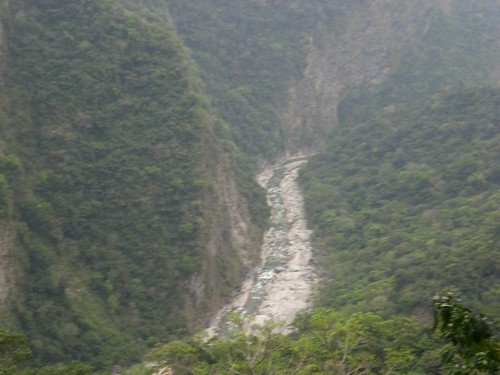
The riding gets really good here. 159A is a wild one lane country road rising from betel nut country up into tea farm country. Almost zero traffic even on holiday weekends. You'll probably need a good four hours or so to reach Shizhuo (石桌) at the junction of 159A and the Alishan Highway.
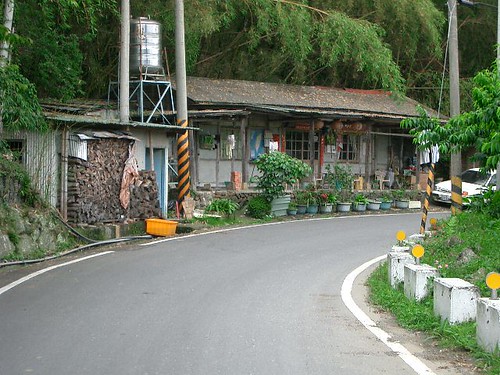 Farmhouse on 159A near Shizhuo
Shizhuo is a good spot for a late lunch at the restaurant on your left at the junction. There is also a breakfast shop on the right and across the parking on the second floor is a cheap hostel (Minsu) where a double usually goes for about NT$500.
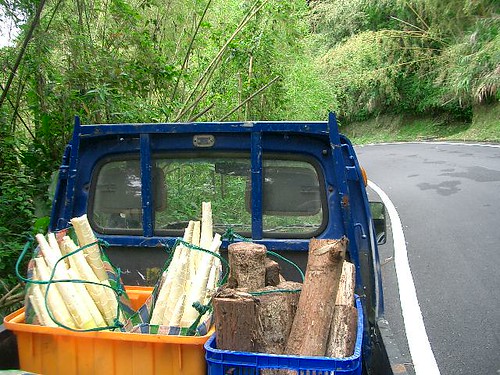 Truck with bamboo shoots and firewood
You may well see other cyclists in Shizhuo. That's because you have so many route options from here. You can turn right and head down the Alishan highway to Longmei where you can continue on with the Chiayi-Pingtung ride Rank wrote up in Great Taiwan Bike Rides III. Or turn left ride 55km up to Tatajia, the Yushan trail head. Neither of these routes is recommended on holiday weekends although you might not have such a horrible time with the traffic if you stay in Shizhuo and get off to a pre-dawn start. Whatever you do, stay far away from the town of Alishan, one Taiwan's most horrid tourist hell holes.
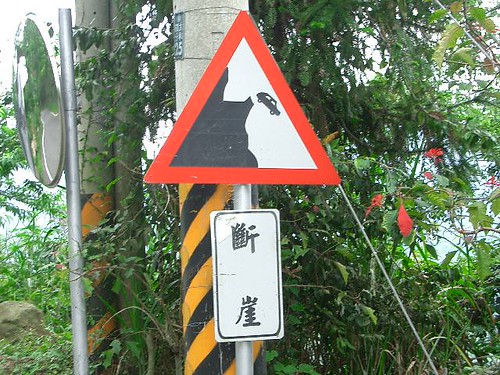
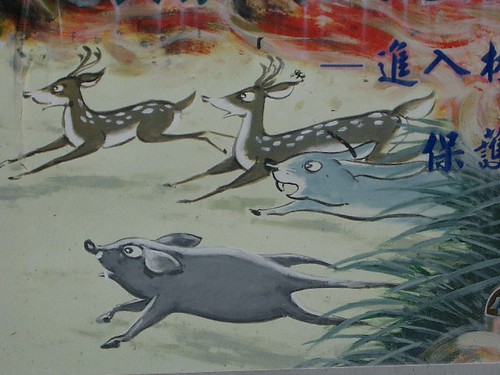 A detail from a sign showing the traumatizing effect of forest fires
Another area to explore from Shizhuo is the Dabang/Jiali area accessible on Route 169 heading east from Shizhuo. SatelliteTV of Forumosa fame lives up in Dabang.

But this loop takes the other way on 169 back toward the tourist town of Fenqihu, a much smaller and tolerable version of Alishan. At Shizhuo, you can stay at the large hostel attached to the Catholic Church and managed by a Polish priest. About NT$700/night.
A tradition on Rank bikes rides especially in the summer is to while away hot afternoon by a waterfall or swimming hole. If you have the time in Fenqihu, head down the steep access road toward Zhonghe Village (中和村). This road is a left after the Catholic Church but before you get into Fenqihu proper. The road heads down steeply for two or three km. When you hit some tea fields look for a private access road on your left near a farming shack. If you see signage for an old trail just before a big construction site you have come about 300 meters too far.
Head down the private access road (very steep) to the Yima River (譯馬溪) for some swimming in the cool waters. Be careful though because you are just upstream from the thunderous Xiaocaishen Watererfall (小財神瀑布) and the rocks are very slippery. There is a dangerous path to a lookout point above. Alas we have been unable to discover a route down to the bottom of the falls. I'm sure you could ask in Zhonghe Village. Incidentally, the outside access road connects Zhonghe Village to Fenqihu from 159A if you want to do a brutal climb up to Fenqihu and skip the longer way through Shizhuo.
Day 2
There is a long descent into Daxiagu (大峽谷) on the Shengmaoshu River (生毛樹溪). Some beautiful water down here. Cross the river and begin the long climb on switchbacks up into Bihu Village (碧湖村). As you can see here, we crossed a landslide that should be fixed by now.
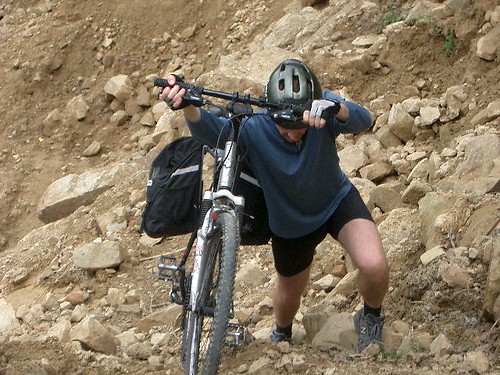 ...but not to Rank
Eventually you will make it to Taiping Village (太平) after a good six hours of riding from Fenqihu. This is the only reliable place for lunch after Fenqihu although snacks and water are available along the way. From Taiping, enjoy the breathtaking descent into Meishan Township on the plains. There are 36 hairpin turns on the way down.
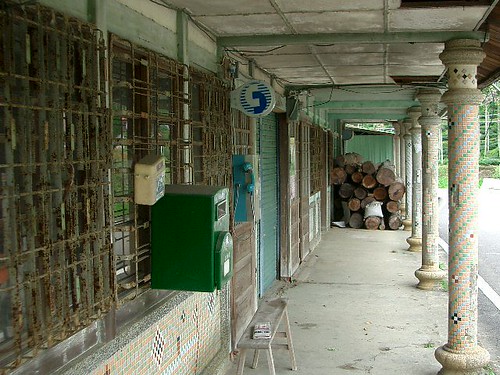 Country store near Taiping
Meishan is a typical country town. On the main street there are a couple of grubby Vietnamese noodle stalls if you are desperate for something other than Taiwanese food. Ride south out of town on Highway 3 about 15 km through Zhuqi until you reach the junction with 169A. Turn right and head back into Chiayi.
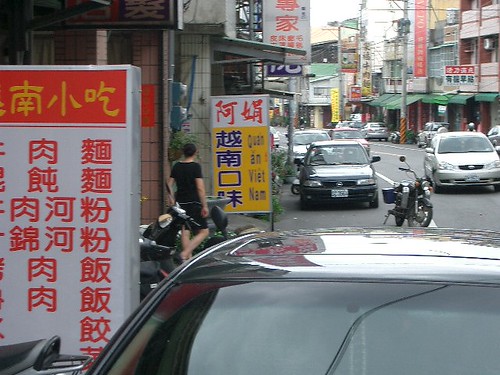 Two competing Vietnamese noodle stands in Meishan
Day 2 is a full day of riding that assumes you leave Fenqihu early in the morning.
In case you haven't figured it out from my earlier routes, some of Taiwan's best cycling is in the Chiayi area.
A real Taiwanese glove
For a weekend trip, I recommend getting down to Chiayi on Friday night because you'll want to be off to a dawn start the next day--it can very hot down here at any time of year. Whether you're coming down by train, high speed rail, or plane, there are a host of reasonably priced hotels (c NT$800/double) in the small streets opposite the rain station.
Tea fields at 2,000 meters await you in MeishanDay 1
The easiest way out of town is east on Minzu Rd, which eventually turns in to Daya Rd. before finally morphing into Chiayi Route 159A. Let all the tour buses and SUVs get their kicks on Highway 18 (the Alishan Highway) while you cycle in peace on 159A.
You'll cycle pass the Lantan Reservoir the Formosa Freeway, the Renyitan Reservoir, and Highway 3 through some hills. Note the junction with Highway 3--this is the way you will be coming back.
The oddly named 'Mainlander Noodles' shop. All the noodle dishes listed are typically Taiwanese
After Highway 3, we knock about 8km in the nondescript countryside of Fanlu ('Aboriginal Road') Township. The fun begins just after the impoverished village of Kezhuang where you climb a few km up to the temple complex at Bantianyan. There is a nice outside cafe on the right just before the temples and some shops where you can stock up on food and water.
Be careful or this might happen to you on 159A
The riding gets really good here. 159A is a wild one lane country road rising from betel nut country up into tea farm country. Almost zero traffic even on holiday weekends. You'll probably need a good four hours or so to reach Shizhuo (石桌) at the junction of 159A and the Alishan Highway.
Farmhouse on 159A near ShizhuoShizhuo is a good spot for a late lunch at the restaurant on your left at the junction. There is also a breakfast shop on the right and across the parking on the second floor is a cheap hostel (Minsu) where a double usually goes for about NT$500.
Truck with bamboo shoots and firewoodYou may well see other cyclists in Shizhuo. That's because you have so many route options from here. You can turn right and head down the Alishan highway to Longmei where you can continue on with the Chiayi-Pingtung ride Rank wrote up in Great Taiwan Bike Rides III. Or turn left ride 55km up to Tatajia, the Yushan trail head. Neither of these routes is recommended on holiday weekends although you might not have such a horrible time with the traffic if you stay in Shizhuo and get off to a pre-dawn start. Whatever you do, stay far away from the town of Alishan, one Taiwan's most horrid tourist hell holes.
A detail from a sign showing the traumatizing effect of forest firesAnother area to explore from Shizhuo is the Dabang/Jiali area accessible on Route 169 heading east from Shizhuo. SatelliteTV of Forumosa fame lives up in Dabang.
But this loop takes the other way on 169 back toward the tourist town of Fenqihu, a much smaller and tolerable version of Alishan. At Shizhuo, you can stay at the large hostel attached to the Catholic Church and managed by a Polish priest. About NT$700/night.
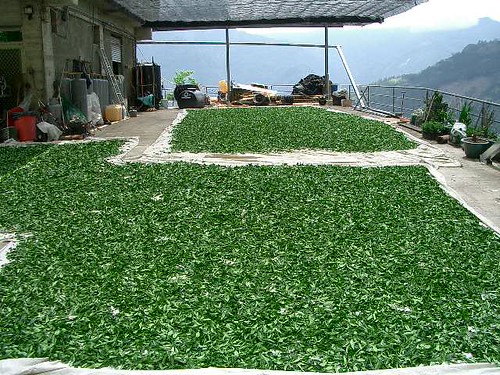
Tea leaves out to dry
A tradition on Rank bikes rides especially in the summer is to while away hot afternoon by a waterfall or swimming hole. If you have the time in Fenqihu, head down the steep access road toward Zhonghe Village (中和村). This road is a left after the Catholic Church but before you get into Fenqihu proper. The road heads down steeply for two or three km. When you hit some tea fields look for a private access road on your left near a farming shack. If you see signage for an old trail just before a big construction site you have come about 300 meters too far.
Head down the private access road (very steep) to the Yima River (譯馬溪) for some swimming in the cool waters. Be careful though because you are just upstream from the thunderous Xiaocaishen Watererfall (小財神瀑布) and the rocks are very slippery. There is a dangerous path to a lookout point above. Alas we have been unable to discover a route down to the bottom of the falls. I'm sure you could ask in Zhonghe Village. Incidentally, the outside access road connects Zhonghe Village to Fenqihu from 159A if you want to do a brutal climb up to Fenqihu and skip the longer way through Shizhuo.
Day 2
Ride up from Fenqihu on 169 through Taihe Village (太和村) toward the junction to Laiji Village (來吉村). There are places to stay in Laiji if Fenqihu is too rowdy for you. At the Youcheliao (油車寮) junction take 169A on the left. Wind through the beautiful high altitude tea farms. Just before a big down hill, hang out at the view point overlooking the great Caoling lanslide across the canyon in Yunlin County. The devastation here was caused by the 1999 Jiji earthquake. Check if the vendors are selling iced passion fruit or mulberry juice. This is all local produce and supposedly organic. Whatever. It's the best on a hot day.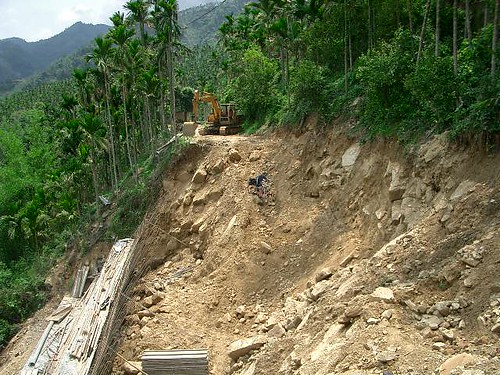 Landslide near Daxiagu closes the road to most traffic...
There is a long descent into Daxiagu (大峽谷) on the Shengmaoshu River (生毛樹溪). Some beautiful water down here. Cross the river and begin the long climb on switchbacks up into Bihu Village (碧湖村). As you can see here, we crossed a landslide that should be fixed by now.
...but not to RankEventually you will make it to Taiping Village (太平) after a good six hours of riding from Fenqihu. This is the only reliable place for lunch after Fenqihu although snacks and water are available along the way. From Taiping, enjoy the breathtaking descent into Meishan Township on the plains. There are 36 hairpin turns on the way down.
Country store near TaipingTwo competing Vietnamese noodle stands in MeishanDay 2 is a full day of riding that assumes you leave Fenqihu early in the morning.


PREVIEW: China Doll
Who Paid?
According to a review of Laura Tyson Li's biography of Madame Chiang Kai-shek,
According to a review of Laura Tyson Li's biography of Madame Chiang Kai-shek,
Taiwanese taxpayers footed the bill for Madame well after Nationalist rule ended.
Madame Chiang Kai-Shek spent her final years in New York in a palatial Upper East Side apartment she regularly described as "modest." A bevy of loyal retainers insulated her from the outside world, ferrying her to shopping trips at Saks Fifth Avenue or shows at Radio City Music Hall. Madame's lavish lifestyle, Li suggests persuasively, was funded in large part by money gleaned from Nationalist-controlled government accounts and decades of business cronyism. In her twilight years she was a living anachronism, feminism and communism having undermined her particular style of faux-naif politics.
Thursday, March 29, 2007
TVBS Reporter Filmed Gangster
The China Times and other media outlets are now reporting that Zhou Zhengbao's video-taped threats were in fact filmed by Shi Zhen-kang, a TVBS reporter from the station's Nantou bureau. TVBS has issued a public apology and fired Shih along with another reporter from the station's central Taiwan department. TVBS broke the story of the videotape a few days ago as an exclusive.
The station is claiming that Shi concealed the origin of the videotape. But officials from the National Communications Council aren't buying the station's story. They say that the station could be fined between NT$200,000 and NT$2 million and ordered to stop broadcasting for up to three months.
Earlier this year, TVBS caused consumer panic after it ran sensationalist reports of consumers who bought ducks with traces of tar in their beaks. Those reports were later discredited by government testing at slaughterhouses but caused financial losses for duck farmers.
Monday, February 12, 2007
A Rereading of Liu Ming-chuan
The following is a translation of a post on Tseng Wei-chen's always substantive blog that appeared several months ago. My comments and notes appear in square brackets [].
Liu Ming-chuan has enjoyed a recent wave of popularity in Taipei political circles. Mayor Ma says he is following is Liu's footsteps and has written several essays linking himself directly to Liu's legacy. And now James Soong has come out with a book called I'd Rather Be Liu Ming-chuan that he used to announce his intention to run for mayor. But Liu is overrated by later generations and has become, with the exception of Koxinga, one of the few historical figures who is highly regarded in both Taiwan and China. Was Liu really such a great man? This view is worth contesting.
Of all of Liu's policies in Taiwan, his policy of 'opening up the mountains and pacifying the aboriginal savages' (kaishan fufan) deserves the most criticism. This was in fact the bloody colonial subjection of the Taiwanese aborigines by force. The most violent episode in this campaign was the pacification of the Rikavon Puyuma [now Beinan Township's Lijia Village in Taidong County] in 1887. The expedition was supported by the Beiyang Fleet, East Asia's largest fleet at the time, despite the fact that the fleet was not officially launched until the following year.The following is a translation of a post on Tseng Wei-chen's always substantive blog that appeared several months ago. My comments and notes appear in square brackets [].
Liu Ming-chuan has enjoyed a recent wave of popularity in Taipei political circles. Mayor Ma says he is following is Liu's footsteps and has written several essays linking himself directly to Liu's legacy. And now James Soong has come out with a book called I'd Rather Be Liu Ming-chuan that he used to announce his intention to run for mayor. But Liu is overrated by later generations and has become, with the exception of Koxinga, one of the few historical figures who is highly regarded in both Taiwan and China. Was Liu really such a great man? This view is worth contesting.
At Liu's request, the fleet's commander Ding Ruchang despatched the fleet's [German built] warships the Zhiyuan and the Jingyuan to Taiwan. Land and sea-based artillery were then used to almost completely flatten Rikavon. This kind of brutal military campaign or betrayal and massacre of aborigines continued relentlessly. Those who were not exterminated fled from their traditional lands to the deep mountains. Liu then moved Han settlers onto aboriginal land, taking away the places the aborgines depended on for their livelihood and raising tensions between the Han Chinese and the aborigines. Hu Shih's father Hu Chuan harshly criticized Liu's aboriginal policies:
It has been 18 years since opening up Taiwan's mountains was discussed. Force has not brought victory while bribery has not been effective. Not one foot of cultivated land has been registered as taxable. Our defenses are do nothing but protect shacks on tea farms, rice paddies, and camphor plantations belonging to wealthy gentry. They do not stop the fierce aborigines from attacking. Every year monies for defense are wasted and vast sums are used to pay off the aborigines to allow farming. It clearly does absolutely no good and the same policies are repeated this year, next year, the following year, and the year after that without anyone waking up or feeling remorse. Isn't this completely ridiculous?
There is also much to be criticized in Liu's much-praised self-strengthening new administration. First of all, his policies heavily favored the north to the expense of the south. In an extension of the rivalry between the Hunan and Anhui factions, Liu used his official position to purge Taiwan Circuit Intendant Liu Ao, who enjoyed widespread support among the gentry in southern Taiwan, by making false accusations. This made it impossible for the southern gentry to trust Liu Mingchuan's leadership. This combined with the many deficiencies in Taiwan's cadastral caused unfair tax assessments and unrest and resulted in the uprising led by the peasant farmer Shi Jiuduan. Shi, who enjoyed significant popular support, was hidden by the people and never captured. Liu's reforms, which were centered in Taipei and intentionally neglected the south, were the beginning of the tradition of favoring the north at the expense of the south that has now lasted for more than 100 years. Poor administration also seriously eroded the effectiveness of Liu's programs.
Liu Mingchuan also ignored Taiwan's poor finances. When Taiwan Province was established, Fujian assisted Taiwan with massive funding. But Liu's reforms were extremely expensive, and Liu did not open up new sources of funding. Since his reforms did not benefit Fujian, Fujian began to reduce its funding for Taiwan. Liu's reforms became a great burden on Taiwan's public finances and created budget deficits.
Even Liu's railroad building, which has been glorified by later generations, is overrated. Liu advocated having the private sector build the railroad supervised by the government and planned to have Li Tongen raise one million taels of silver in southeast Asia to construct a railway from Keelung to Changhua. But the project was enormously expensive, so investors stayed on the sidelines and shares were under subscribed. In the end, the government had to take over the project.
Construction was difficult and building the section between Keelung and Hsinchu alone cost more than one million taels and construction quality was poor. James W. Davidson's The Island of Formosa Past and Present (1903) has vivid descriptions of the many deficiencies in the construction and operation of the Taiwan railroad. After Japan took over, they abandoned Liu's railway and built a new one.
Liu Mingchuan's excessive severity as an official is always overlooked. For example, Liu set strict standards to maintain the efficiency of his modern postal system and did not allow the soldiers who delivered mail to be late. In the Danshui/Hsinchu archives, there is the case of a soldier named Wu Ruiqi who lost a letter he was delivering. A furious Liu had the unfortunate Wu beheaded and stuck his head on a pole to set an example. Liu's cruel administration of his reforms made them unpopular with the people.
After Liu left office, his successor Shao Youlian adopted more moderate policies after a review of the realities at the time and halted a number of Liu's less successful programs. Although Shao also thought that operating a rail system was important, he reluctantly stopped maintaining the Danshui-Hsinchu line. He also reformed the civil service, created new sources of revenue, and improved Taiwan's relations with the outside world. His many contributions to Taiwan also included reforming the soldiery and defenses and he fixed many of the problems left over from the Liu era. The shallow and formulaic condemnations of him by later generations is unfortunate.
Given Taipei's present environment and development, we would be better off with a pragmatic, moderate mayor like Shao rather than one like Liu who developed extravagantly. If we want to discuss who has contributed the most to Taipei's development, both Goto Shimpei during the Japanese era and Kao Yu-shu in the post-war era both had far greater influences on Taipei than Liu did. There's really not much use in trying turn Liu into a myth or trying to get mileage out of him.

Wednesday, January 17, 2007
中時電子報|焦點新聞|愛滋新增感染者 首度負成長
Fascinating Statistics: HIV, Drugs, and Needles
The China Times had some fascinating statistics in a story today about how the number of new HIV infections in Taiwan has dropped for the first time ever.
Number of new reported infections in 2006: 2,942
Number of new reported infections in 2005: c. 3,300
Total reported infections (Taiwanese): 13, 103
Percentage of new infections from intravenous drug use in 2006: 60%
Percentage of from intravenous drug use in 2005: 73%
Estimated number of heroin addicts in Taiwan: 60,000 to 100,000
Number of needle distribution centers: 730
Number of clean needles distributed by government so far: more than 450,000
Average monthly cost of a heroin habit: NT$40,000
Average doses per week: 7
Hospitals with methadone programs: 19
Number of people imprisoned in Taiwan: 60,000
Number of people imprisoned on drug charges: 40,000
Number of HIV positive inmates: c. 6,000
The Liberty Times ran a similar story with a little partisan sniping at the end. The Center for Disease Control, a national agency, complained that Taipei City was not doing its part in the CDC's nationwide HIV harm reduction program that distributes the needles.
The Taipei City Health Department agreed that Taipei isn't distributing enough needles. They said that the Taipei police are rigorously enforcing regulations requiring that suspected users have their urine tested. This makes heroin users afraid of being identified if they go to needle distribution points in Taipei.
Incredibly, Tainan County intends to launch a pilot program to sell hypodermic needles in convenience stores. Way to go Tainan!
On the negative side, the incredibly high number of people locked up for drug offenses shows that Taiwan is yet another country losing the war on drugs and wasting taxpayer money by incarcerating people who are sick.
曾韋禎的部落格:小歪老師 - 樂多日誌
Transgender Teacher Fired?
[All links point to Chinese-language sites]
Tseng Wei-chen is blogging and TV station ETToday is reporting on Jane, a physically male teacher at Concordia Middle School in Minsyong, Chiayi County who has been taking female hormones for the past 19 years and is now planning to have sex reassignment surgery. Tseng criticizes the conservative Lutheran school for firing Jane and "acting like the spokesman of God with a Pharisee sneer on its face." Tseng, who attended Concordia although he did not have Jane as a teacher, notes that the Taiwanese Presbyterian Church is the only liberal church in Taiwan.
In a story filed earlier today, ETToday reported that the school asked Jane to resign, and when she refused ordered her to dress as a man at school. When reporters tried to cover the story, the school called the cops.
ETToday is now reporting that according to the school, Jane has not been fired and notes that by law any decision to fire a teacher must be made by the school's Faculty Evaluation Committee, not the school administration.
Somewhat salaciously, ETToday mentions that Jane is married and has four children. CTS puts a much more positive spin on the story, saying that Jane's family--including her wife and mother--support her decision.
Thursday, August 17, 2006

Great Taiwan Bike Rides IV: Taidong Loop
This ride can be done in one long day. As usual though, I spent the night at the Dulan Sugar Refinery first and spent a bit of time the first morning exploring the area around Dulan. It's about 15km from Taidong to Dulan on Route 11 up the coast.
Then it was off to the beautiful Jinzun beach about eight kilometers up the road where I had a refreshing Espresso ice smoothie and a lounge about the beach.
It's just few more kilometers on Taiwan Route 11 through Donghe proper and the turnoff to Route 23. Ride 5 km on a very gentle uphill grade to the farming town of Taiyuan.

There's a sign in Chinese for Taidong County Road 23 which follows the Mawuku River into an incredibly sleepy valley that time seems to have forgotten. Near Shangde Village I saw a waterfall to the east. I didn't have time to check it out though because it was already 3:30pm. There is a junction at Shangde that looks like it would take you to the waterfall.
There are shops every 5km or so until you reach Qikuaicu The road is a gentle grade until about km 8 where you climb for three or for km before a downhill that takes you into Qikuaicu.
After Qikuaicu you will begin a fairly long climb of about 7 or 8 km. There are no shops along this section which was apparently only paved in the late 1990s. The road is in bad shape, so don't think about riding a road bike through here.
Taidong County Road 23 continues on across the Fuxing Mountan Range and over to Taidong County Road 197 on the eastern side of the Rift Valley. There are no kilometer markers after km. 13 or so; I would estimate that it is 25 km from Taiyuan to the junction with 197 at Zhongye. Be careful on the section after Qikaicu. There is a lot of water on the road since it is paved with concrete, the surface can be very slick indeed. Somewhere around km 17 (estimate), a large tree was blocking the road completely. I was able to slide my bike under it to get through.
From Zhongye it is about another 15 km back to Taidong on a beautiful one lane road that eventually takes you over the tail end of the Coastal Mountain Range. I had some beautiful sunset views of the Pacific Ocean from here. At a village called Fuyuan there are several shops with nice views selling traditional Taiwanese mutton hot pots. This would be a great feed at the end of a grueling day if you were with a group.
Monday, August 07, 2006
Great Taiwan Bike Rides Part III: Chiayi to Pingtung
This ride is best done in three days although we did it in 2 very long days (>100km both days). This is a classic ride through some of Taiwan's most beautiful back country.
[Update 2010-4-2]: Here's a Google map of the route using 159A instead of Route 18. 159A is a one lane beauty of a road with far less traffic. Note that Namaxia area was seriously damaged by Typhoon Morokat last August followed by the earthquake in early March. According to this blog post from a few weeks ago, the roads are passable. Please report road conditions in the comments.]
Friday evening
Fly to Chiayi with bikes. Stay at one of the cheap hotels near the train station. Don't try riding out of town to look for a hotel. We ended up sleeping outside in Chukou because there was nowhere to stay.
Saturday
This is the toughest day with two grueling climbs if you make it all the way to Sanmin.
Take Route 18 east toward Alishan. You will begin to climb at Chukou. Stay on Route 18 until you reach Longmei. Stop here for a well-deserved break and don't miss the handmade baozi at the first shop on the left-hand side of the road.
At Longmei, turn right onto Jiayi Route 129. This is also known as the Shanmei Access Road (??????). Enjoy the long downhill. Take a dip in the Puyanu Creek near the Chashan suspension bridge or trace the creek east up to the waterfalls. When you get to Chashan, stay left on 129-1. The roads are not very clearly marked here. There may be some guest houses at Chashan. This would be a good spot to stop for the night. Otherwise you will need to push on over the mountain to Sanmin. Make sure you have enough water. Country store are far apart here.
Sunday
129-1 is not well maintained. It eventually turns into the Chashan Access Rd. and eventually connects up with Route 21. There is accommodation in Sanmin and a couple of noodle shops that close at dusk. Head southwest on Route 21 for a lovely wide out to Jiaxian. Ride over the Neiyingshan Mountains on Route 20 (the Southern Cross) east and drop down into Laonong. At Laonong ride south on Route 27 until you reach the turnoff for Kaohsiung Rt. 113. Ride up 113 a few kilometers north and stay at one of the many hot spring hotels. Alternatively, go all the the way up to Baolai, turn right at the school and climb up to the Shidong Hot Springs ????. This secluded spot is one of my favorite hot springs in Taiwan, but call first because accommodation is limited.
Monday
This day will be long but mostly flat unless you do a side trip up to Maolin. Coming off 113, turn right back onto Route 27. Backtrack about .5 km and turn left onto Kaohsiung Route 131. Take 131 down to Liugui, cross the Liugui Bridge, and get back onto Route 27 heading south. Ride down the east bank of the Laonong River on a lovely road through some of Taiwan's prettiest countryside. Notice the distinctive Hakka farmhouses along the way.
If you are making good time, turn left at Dajin and ride up into Maolin. Eat some barbecue at Duona and soak in the hot springs.
From Dajin, ride south on 185, otherwise known as the Mountainside Highway ????. Stay on 185 all the way to Sandimen and then take Route 24 into Pingtung where you can stash your bikes on train and then fly or take the train back.
Thursday, August 03, 2006
Can you feel it coming on?
If you've been enjoying fine government propaganda commercials like You Are Not Alone and Ilha Formosa: Taiwan will Touch Your Heart, I'm sure you will also enjoy this allegorical look at relations with China entitled, I kid you not, Can You Feel It Coming On. Brought to you by the folks at the Mainland Affairs Council.
Note: I could only get Ilha Formosa to play in IE. Grrr...
Wednesday, August 02, 2006
Madame Chiang cost Taiwan NT$1 billion
The China Times today reported that Madame Chiang Kai-shek's upkeep in the US over the last 30 years of her life cost Taiwanese taxpayers NT$1 billion. During the last years of Madame Chiang's very long life, her niece Kong Ling-wei was chaffuered around by Madame Chiang's driver--also at taxpayer expense. President Chen rejected suggestions that Madame Chiang's retinue be reduced on two occasions since 2000.
The story is based on unnamed sources, presumably inside the Presidential Office who fed the story to the China Times with the clear intention of putting recent allegation of corruption over the of a housekeeper at the president's family residence in perspective.
President Chen's disabled wife Wu Shu-chen, in contrast, has no staff assigned to her, and she pays her private nurse out of her own pocket.
This is indeed one of the great mysteries of the Chen administration. Why didn't he shut down Madame Chiang's tax payer-funded lifestyle and make sure his children and relatives were not abusing his office (albeit lesser scale by far)? And why didn't his administration, elected on a reform platform, at least attempt to reform Taiwan's imperial presidency? If he had, he would have easily survived this concatenation of manufactured and trumped-up charges against him by the rabid Blue camp. But since he has failed to carry out his mandate, he is being punished by an angry, alienated electorate.
Tuesday, June 13, 2006

Sunday, May 28, 2006
Great Taipei Rides II: The Graveyard (and Beyond)
This is an ideal training ride for people who are tired of riding along the flat bike paths by the river. If you are looking for better scenery, a better workout, and less people, you need to learn how to climb hills in Taiwan to be able access the truly great rides here. Here is an article on how to climb hills. I have a few of my own tips at the end of this post.
Head down Heping East Road past the the Liuzhangli MRT station at the corner of Keelung Rd. and Heping. Turn left onto Jiaxing St. at the first light after the MRT station. Ride past Bobwundaye and continue on Jiaxing past the police station until you see 711. Turn right onto Chongde St. and ride past some interesting old brick shops and houses in the heart of Liuzhangli. You will pass the local Earth God's temple. He is particularly efficacious according to the friendly owner of the country store across the street. This store, incidentally, was built by the current owner's mother-in-law who hauled bricks down from Fudekeng after American air raids during World War II.
Keep to the left to stay on Chongde and you will pass through a ramshackle shanty town of the kind that used to be all over Taipei. The road will begin to ascend gently and you will soon find yourself in Taipei City's public cemetery. The first section is the Muslim cemetery in which Bai Chongxi, the famous Republican Muslim general from Guangxi, is buried. A little further on, you can take a steep left and visit the White Terror Memorial.
Stay on Chongde for several km. After the first climb, the grade gets much easier even though you are steadily climbing. You will eventually come to a junction. Yanjiuyuan Rd. on the left will take you to Nangang. Stay on Chongde for another five minutes or so and you will see an abandoned truck weighing station. Turn right here and head downhill to Muzha.
At the bottom of the hill is Muzha Rd. From here you have many options for longer rides:
Pingxi/Pinglin (via Shiding).
Cross the bridge toward Taipei Zoo and turn left onto Xinguang Rd. Stay on Xinguang Rd. as it loops under the freeway and continue on straight down Wenshan Rd until it ends. Now cross the river and you will be on Beishen Rd. having bypassed unpleasant downtown Shenkeng. From here you can continue onto to Pingxi and Pinglin via Shiding. It is also possible to take a small access road over the hills to Nangang and then loop back to the cemetery on Yanjiuyuan Rd. (see above).
Zhinangong Loop
If I am just out for quick three hour workout, this is the route I usually take. Turn right on Muzha Rd, cross the freeway exit, and continue on until you reach Jungong Rd. Cross to the other side of Muzha Rd. and look for the entrance to the Jingmei River bikepath. The second bridge is Zhinan Rd. Cross the bridge and follow Zhinan Rd. to Zhengda's main gate. Turn left at the bus station and then right onto Wanshou Rd. Climb up Wanshou Rd. to the Zhinan Temple parking lot. Stop for a bit of a rest and a popsicle at the first vendor on the right in the covered market. Carry your bike into the covered market. After the first few shops, you can see up the hill on the left. Carry your bike up the steps on the left (this a bit of a workout) until you reach a concrete path. Turn left and head up the slick trail which will loop up onto the ridge. Stay on the trail veering to the right (nice view of Zhinan Temple, one of Taiwan's most important Taoist temples, on the left) until you reach a second parking lot. Follow the road out the back of the parking lot. About .5 km later you will see a dirt trail on the left. Off-road enthusiasts of all levels will enjoy this single track that is nearly flat and takes about 10 minutes if you can stay on your bike. This trail is much flatter after the first 1/4 but is very wet and slippery after rains as it is one the wet side on the mountain. You will come out on Zhinan Road on the other side. Head down hill to return to the Zhengda area, go straight to Maokong, or head over the hills on Zhinan Rd. to Shenkeng's Wenshan Rd. (See above).
If you don't like off-road riding, just continue on and you will run into Zhinan Rd. a little further down the hill from the off road trail's exit. Turn right and head down the hill back to the Zhengda campus.
Back to Gongguan via bike paths
Get back on the Jingmei River bike path on the far side of the Jingmei River. The path is still under construction as of this riding, but there is another alternative walkway/bike path on top of the river wall. Switch to this after about 1.5 km when the construction gets heavy. Stay on top of the dike until you get to the bridge at Baoqiao Rd. Cross under the bridge and follow the river on Xinhai Rd. Section 7 until you hit Muzha Rd. Turn left for just a few blocks and make another left onto Lane 70 across from Yongjian Elementary School. Follow Lane 70 and you will quickly find another bike path/walkway on the dike. Follow this until you come out on Muzha Rd. again and then stay on Muzha Rd. until you get to the old Jingmei Bridge where you can access the Riverside Park bike paths. Take these to Gongguan or Guting.
Shorter Return to Heping East Rd. Section 3/Bobwundaye
If you are doing the graveyard as one of your first rides, you may be too tired to do the Zhinan Temple ride. If so, turn right onto Jungong Road and follow it up to the Zhuangjing Tunnel. Go through the tunnel and follow Wolong St. down the hill. Stay to the right and you will be on Heping E. Rd. Section 3. If you are heading to Bob's for a few well-deserved cold ones, a more pleasant way is to turn left off Heping on Lane 463 at Linguang MRT Station. Stay on Lane 463 keeping to the left and continue on until you run into Chongde St. right near the temple. Stay on Chongde until you see the 711 at the corner of Jiaxing St. Turn left onto Jiaxing St. and you will see Bob's blue sign on your right after you pass the police station.
I dislike riding through the Zhuangjing Tunnel (dangerous and polluted). Instead, I usually take the last left before the tunnel and go straight up the hill. This road connects up with Wolong St. on the other side of the tunnel.
Climbing Tips
Taiwan has some of the world's steepest mountains. That means it is nearly impossible to avoid climbing hills if you want to go anywhere nice on your bicycle. Here are a few tips that help me:
- Use toe clips or lock-in riding shoes
- Make sure your seat is not too low--you need to extend properly
- Try to breathe deeply rather than panting
- Relax your upper body--a tense chest and straining arms aren't going to help
- Focus on short-distance goals rather than the 7km you need to grind out. I often focus on a telephone pole or sign 200 or 300 meters away as a target
- Zig-zag if the grade is really steep
- Try not stay in your granny gears on medium grades. You just end up flailing about and wasting energy
- Remember that the first climb always hurts the most! You will feel much stronger on the second of third climb of the day. Get over the hump!
- If you ride regularly, you will be amazed at how fast what once seemed to be impossible hills now seem easy. I walked my bike most of the way up the first hill on this ride and was quite sure I would never want to do something so painful again. Fight through those feelings. It will be much easier next time!
Saturday, May 27, 2006
Great Taipei Rides I: The Xindian Loop
Update [2010-3-29] A number of people get lost or can't find the right turn off on Pingguang Rd. The Biking Viking has a nice write up and a good photo of that turnoff.
This four hour ride is an excellent weekend morning ride that will help you get in shape for some of the harder rides outside of Taipei. It's amazing that such great riding is available so close to Taipei, and if you use the MRT, you can cut out nearly all of the unpleasant city riding. I timed this ride starting in the Yongkang St. neighborhood. If you take the MRT (recommended), your actual riding time would slightly less than 3 hours. This ride lower medium in terms of difficulty-but you must be comfortable with climbing hills. If you have not learned how to climb hills yet comfortably, I would recommend you practice on the road through the Fudekeng cemetery behind Liuzhangli. This ride is written up in Great Taipei Rides II: The Graveyard (and Beyond).
Taipei to Xindian
You have two options: take the MRT to Xindian Station or ride via the Riverside Park bike paths down to Xindian. Enter the Riverside Park bike path from Siyuan Rd. behind the Gongguan night market passing the Taipei Water Park on you way in. When you enter the park, turn left and head south toward Xindian. After a short downhill, you will pass the Baozangyan (Treasure Hill) and go under the Fuhe Bridge. Continue all the way down to the Jingmei River and follow the bike path along the Jingmei River. Exit the bike path at the Old Jingmei Bridge on Jingwen St. Cross the bridge into Xindian and go straight on Jingwen St. until you run into Roosevelt Road. Continue in the same direction (south) along Roosevelt until you get to the Xindian Station.
2. Bitan
Exit the Xindian MRT station at the back where the buses park. Follow the street along the flood wall into the market street and then turn right to cross the Bitan Suspension Bridge. On the other side, go straight for about 50m. and find the entrance to Hanbi Road (there is a 711 at the corner).
Hanbi Road is a few blocks of typical city and then you have your first short climb. At some point Hanbi Rd. turns into Yongye Rd. You will pass a Family Mart in this fairly pleasant suburban area, and then all of a sudden you are cruising downhill into rural Taiwan. Now you are on Tanxin Rd. passing through farms and some very sleepy little villages. A few kilometers later you will come to a poorly marked juncture. Follow the road on the left going down. The higher road on the Right (Tanxin Rd.) is the one you will come down on in about 90 minutes to complete the loop.
After you take the left hand turn and go down, you will do another brief climb and then will find yourself riding beneath some pretty cliffs along the edge of the Xindian River. The water is a beautiful green on sunny days and there are lots of flowers here in the spring. Stay on this road until you come to a T-intersection with a few houses and a country store on the right. Buy water here--this could be your last chance for the next 15km, most of which will be uphill.
Pingguang Creek to Shitouzaishan
Turn right onto Pingguang Rd. Follow Pingguang Rd. along the river for seven km. You are going steadily uphill now, but the grade is very forgiving and you should be able to make good time. The turn-off to Shitouzaishan (Lion Head Mtn.) is always a bit further than I think. You are looking for a bridge just after km. 7 next to a country store made of green corrugated metal (this store is only sometimes open on the weekend). The house across from the store is No. 285 Pingguang Rd. and there is signage (all in Chinese) for Shitouzaishan, Youlai, and Jiqing Temple. Cross the bridge and begin the climb up a beautiful quiet country road. You can stop for a quick dip in the Pingguang Creek on the far side of the bridge where a rough trail leads down to the refreshing water.
The climb is about 8km and takes around 60 minutes with one 5 or 10 minute break thrown in. The first few km. are relatively tough as you gain altitude but it gets easier and there are some nice flat sections between km. 10 and 12 you can rest on. At 11.5 a small stream crosses the road. If you look to your right up the hill, you will see a 'waterfall' about 3 meters high. Alas there is no pool, but you can use the waterfall for a very refreshing shower. There is another small pool on the left that you can take a quick dip in if the water is high enough. At km. 12.5 there is a nasty straight climb that can be a bit of an unpleasant shock if you have been taking things too fast. There is a temple around km. 13.5 where you can go upstairs and help yourself to warm water and stale cookies (leave a donation) if you are really desperate. The temple caretakers are nice but very spaced out--they are Taoist practitioners who spend most of their time quelling demons.
For some reason, I have seem more people bonk on this climb (myself included) than anywhere else in Taiwan. It's not that tough of a climb, but I think people try this when they are still getting into shape and sometimes push themselves too hard. It's also usually very hot by the time you get to the top in the summer. I don't like being up here too long after 9:00am in the summer. So please make sure you bring plenty of water and some snacks for this. If do this ride in the spring, you will see flowers everywhere by the sides of the road and, in the evening, fireflies.
You will pass the entrance to the Shitouzaishan hiking trail and enjoy a nice view of the Ankeng area of Xindian around km. 15. You then enjoy a screaming downhill that never fails to surprise me by how long it lasts. You will come out on Xintan Rd. at the junction I mentioned earlier. Head back to Xindian via Xintan Rd. and Yongye Rd.
Monday, May 15, 2006
Pandas and Their Discontents
[This post is a translation. The original is on KusoNews. All photos from KusoNews]
This was Taipei Zoo's orginal plan:

After the pandas didn't show, Taipei Zoo came up with these alternative plans to pacify the multitudes:


With this [latest] defeat in the War of Unification, China decided on another plan...

...
[This post is a translation. The original is on KusoNews. All photos from KusoNews]
This was Taipei Zoo's orginal plan:

After the pandas didn't show, Taipei Zoo came up with these alternative plans to pacify the multitudes:



With this [latest] defeat in the War of Unification, China decided on another plan...

...
Subscribe to:
Posts (Atom)